
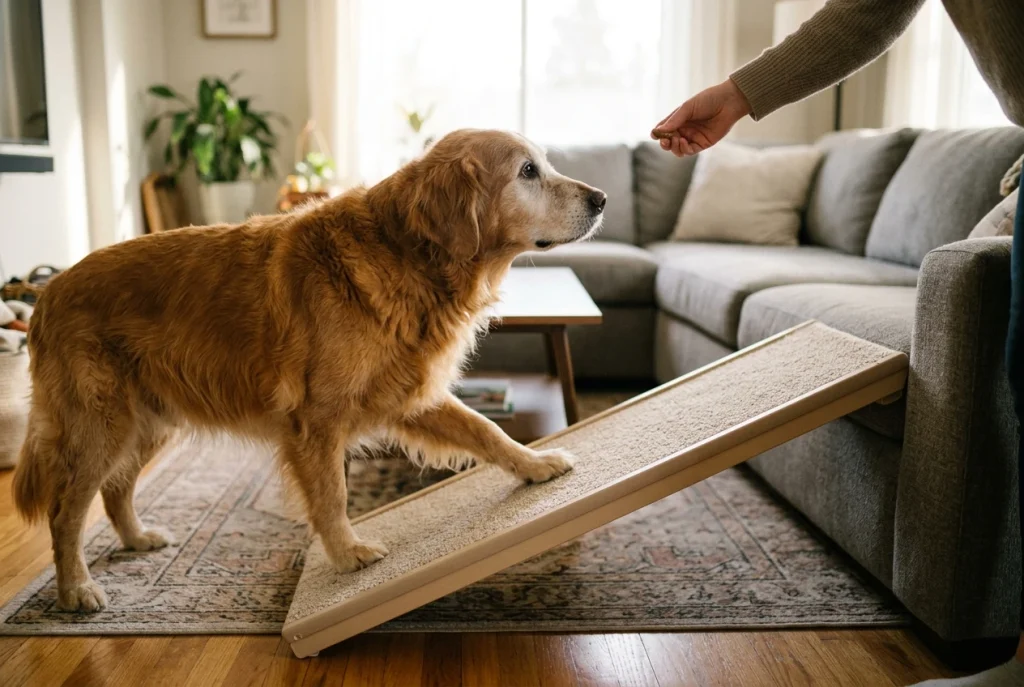
Most owners of aging dogs don’t notice one big change. They notice a pause before the stairs, a nap that goes on longer than it used to, or a skid across the kitchen floor. Those small moments are the most common signs your dog is slowing down, and most of them have simple fixes you can put in place at home.
This guide covers nine everyday changes, pairs each with one practical comfort idea, and marks the ones that call for a vet visit rather than a purchase. Gear can make an older dog’s day easier, but it cannot tell you why something changed.
The small changes that tell you your dog is entering their senior years
Dogs age at different rates. Size, breed, and individual health all affect when a dog starts to feel older, so a birthday number is a weaker guide than what you see in daily life.
What you are looking for is a pattern. One slow morning after a long hike is just a tired dog. A slow morning that repeats for weeks is worth writing down, because it helps your vet later and helps you pick the right comfort item now.
The nine changes below are grouped the way they tend to show up at home: moving around, resting, walking and playing, and the body basics of eating, drinking, and bathroom habits.
Hesitating at stairs, the couch, or the car: when jumping gets harder
Sign 1: your dog pauses before a step or a jump. Maybe they used to launch onto the sofa and now they stand there, shift their weight, and look at you. That pause is often a dog weighing whether the movement will be comfortable.
Sign 2: your dog stops trying altogether. They wait by the car door to be lifted, or they stop coming upstairs at bedtime.
The comfort fix here is a ramp or a set of pet steps. A ramp for the car or the couch lets your dog keep the habit of going where you go without the strain of jumping up and landing back down. A few things make a ramp work well:
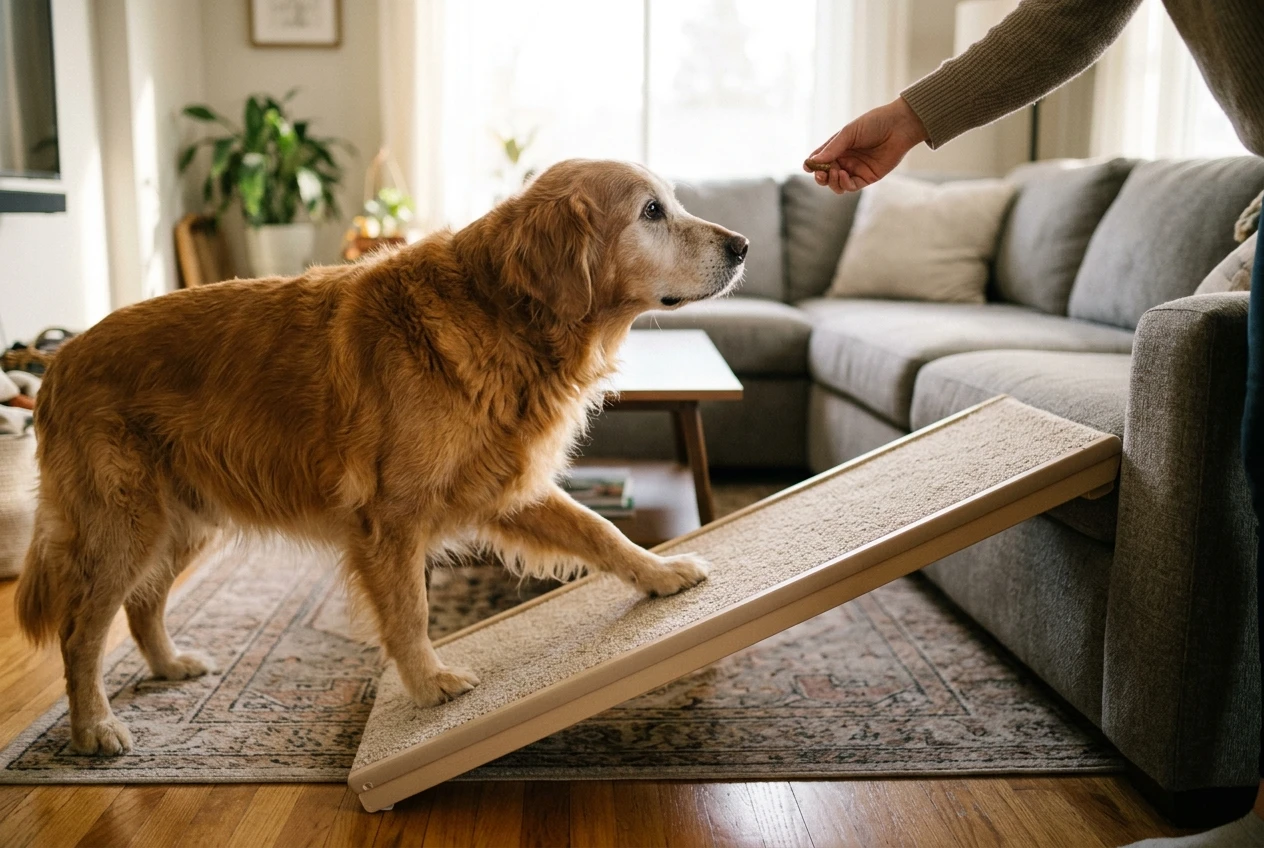
- A non-slip surface, so paws grip instead of sliding.
- A gentle incline, which usually means a longer ramp for a taller surface.
- A width that matches your dog’s body, so they feel steady rather than squeezed.
Introduce a ramp slowly. Let your dog sniff it on the floor first, then reward them for putting one paw on it. Many dogs need several short sessions before they trust it.
If your dog yelps when jumping, refuses to move at all, or suddenly cannot manage something they did easily last week, book a vet visit before buying anything. Sudden changes deserve a professional look.
Sleeping longer and deeper, and why bedding suddenly matters more
Sign 3: your dog sleeps more, and sleeps harder. Older dogs often nap longer and may not wake when you walk in. More rest is a common part of aging, and it means the surface under your dog matters more than it used to, since they spend a larger share of the day lying on it.
A thin, flattened bed gives little cushioning between a dog’s joints and the floor. An orthopedic bed, usually built with a supportive foam base, spreads body weight more evenly. When you compare beds, look at:
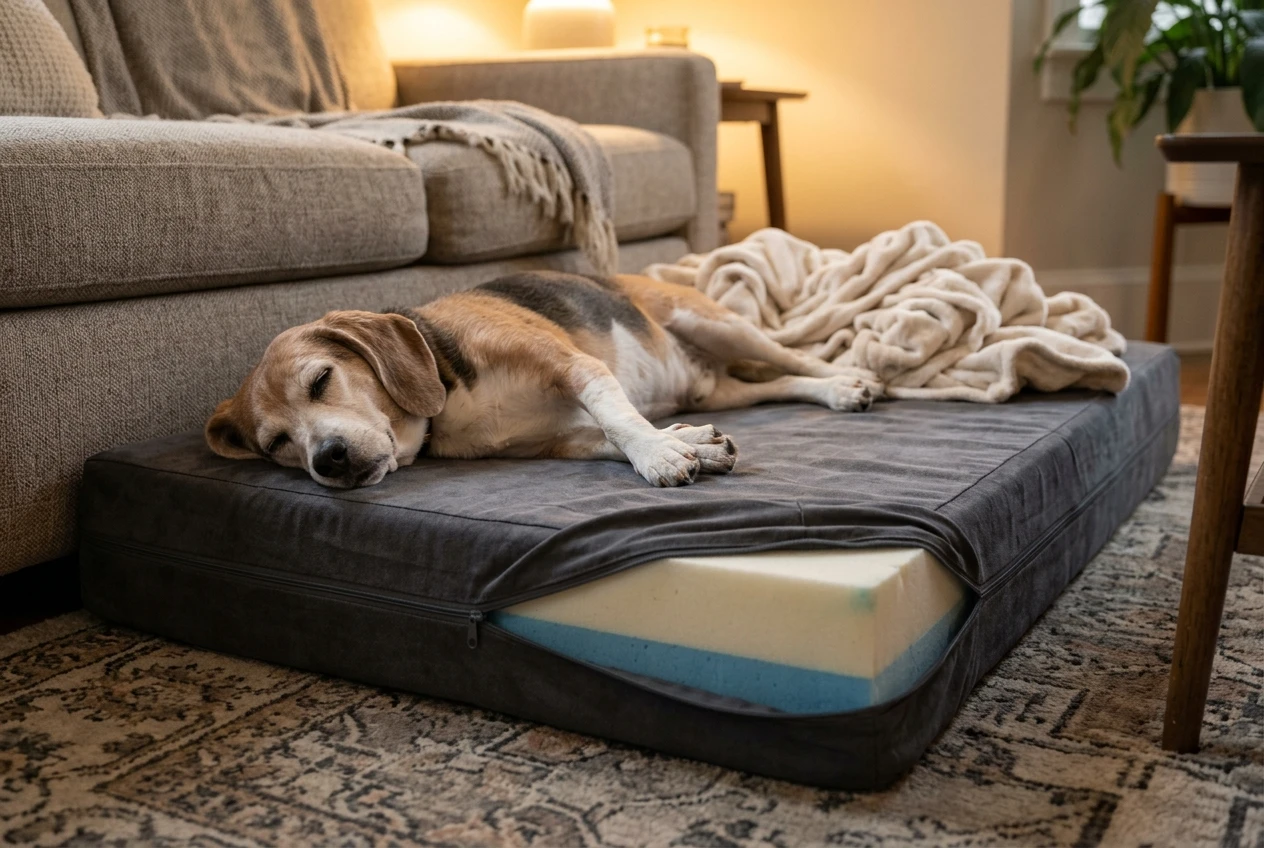
- Thickness and support: foam that springs back when you press it, not filling that mashes flat.
- Low entry: a bed with a low or cut-out front edge is easier to step into than one with a tall bolster.
- Washable cover: older dogs may have accidents, and a removable cover saves effort.
- Size: your dog should be able to stretch out fully, not only curl up.
Watch how your dog lies down. If they circle many times, flop heavily, or seem to search for a comfortable position, the bed may not be doing its job. Put the new bed where they already like to sleep, near the family, rather than in a quiet corner you picked.
Some dogs sleep more simply because they are older. Sleep that comes with other changes, like confusion, restlessness at night, or loss of interest in everything, is something to mention to your vet.
Slipping on hardwood and tile: easy fixes for traction
Sign 4: your dog slides, splays their legs, or avoids slick floors. Older dogs often have less strength in their legs and less sure footing, and hard floors make that obvious. A dog who skids may start walking tensely or stay on the carpet and refuse to cross the kitchen.
Traction is one of the cheapest comfort improvements, and you can approach it in layers:
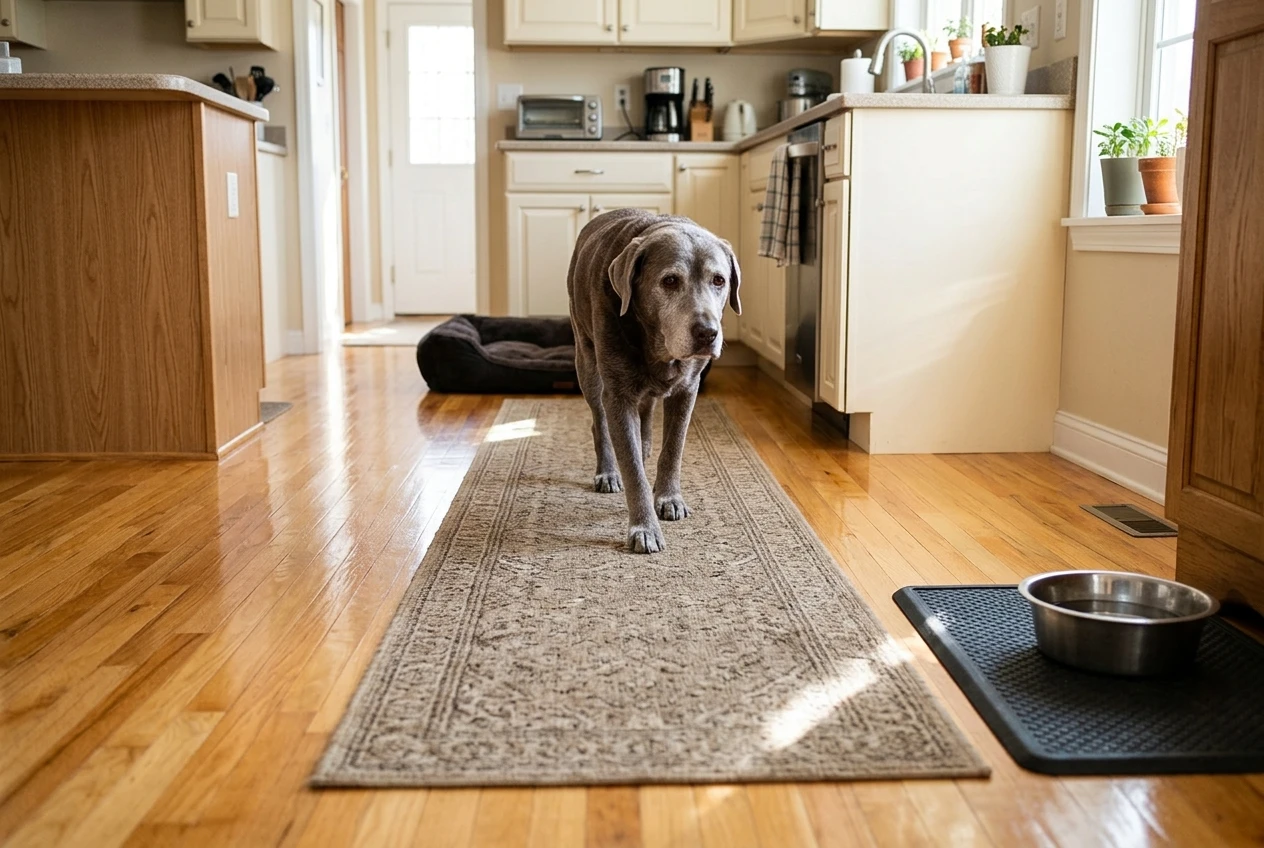
- Runners and rugs: place non-slip runners along the paths your dog uses most, such as from the bed to the water bowl to the door. Use rug pads or grips underneath so the rug itself does not slide.
- Yoga-style mats or interlocking foam tiles: these work well at the top and bottom of stairs and near food and water.
- Paw grips and traction socks: some dogs accept soft, grippy boots or socks indoors. Others hate them, so try one pair before buying several.
- Paw care: long hair between the pads reduces grip. A groomer or your vet can show you how to trim it safely.
Watch for rugs with curled edges, since an older dog catching a toe can fall. Fix the edges before you walk away.
Slower walks and shorter play: how to adjust without taking the joy away
Sign 5: your dog lags behind on walks. They stop to sniff more, turn around sooner, or ask to go home earlier than they used to.
Sign 6: play ends sooner. The tug game that lasted ten minutes now lasts three, or your dog watches the ball instead of chasing it.
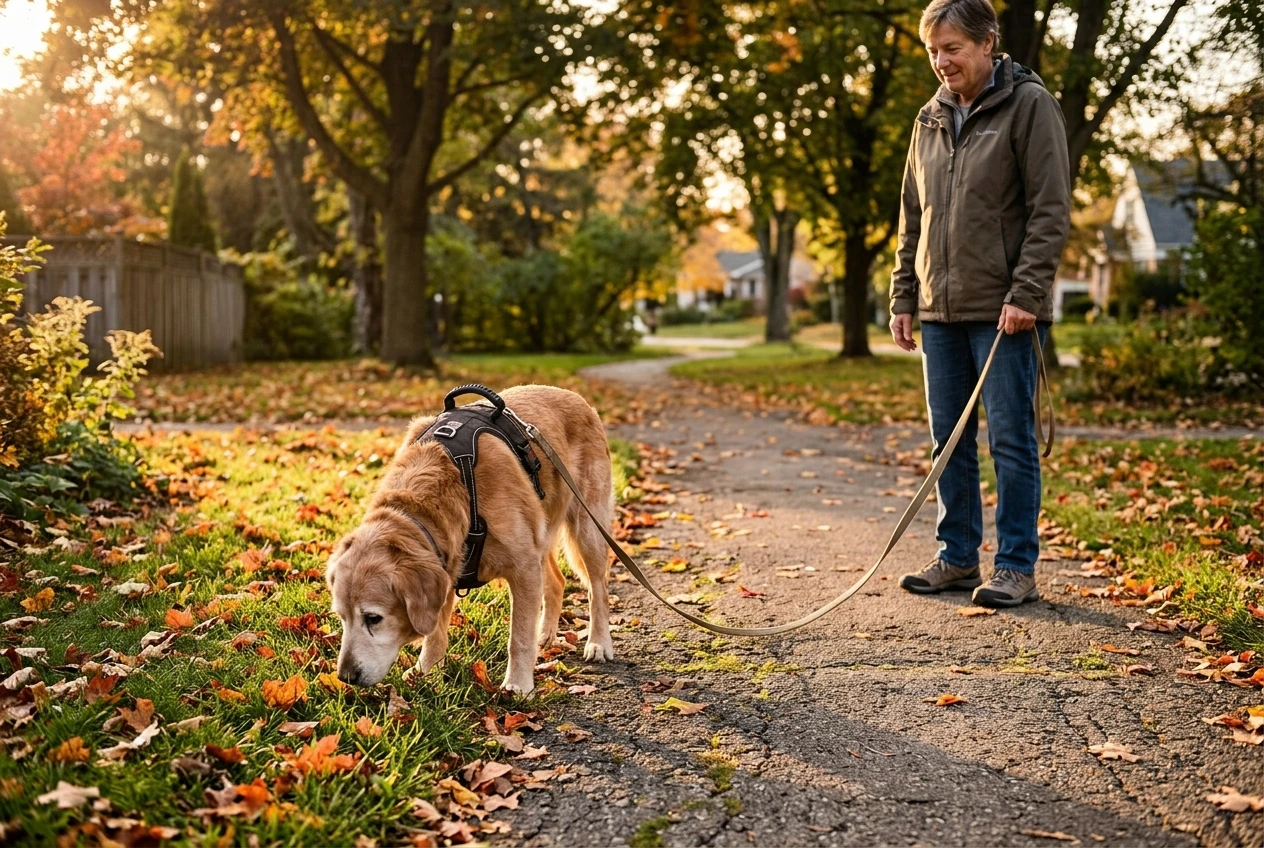
Your dog still wants to be part of things. What changes is the format. Instead of one long walk, try two or three shorter ones, and let your dog set the pace. Sniffing is real exercise for the nose and brain, so a slow, sniff-heavy stroll is a good outing, not a lesser one.
For play, swap high-impact games for gentler ones:
- Roll a ball a short distance instead of throwing it far.
- Hide treats around a room for a search game.
- Use a food puzzle or snuffle mat for mental work.
- Keep tug gentle and low to the ground.
A harness with a handle on the back can help if your dog needs a bit of support on steps or when getting into the car. Choose a well-padded, adjustable style, and check that it does not rub under the legs.
Pay attention to how your dog recovers. If they are limping, panting heavily, or unusually stiff the next day, shorten the outing and talk to your vet. Tiredness that lingers is information, not stubbornness.
Stiffness after rest, and which comfort aids can ease it
Sign 7: your dog is stiff when they first get up. You may see a slow stretch, a few stiff steps, then an easier gait once they warm up. Many owners spot this first in the morning or after a long nap.
Several comfort aids can make those first steps easier:
- An orthopedic bed: good support helps your dog get up from a better resting position.
- Warmth: a cozy blanket or a bed with a bolster keeps a dog comfortable in cool rooms. Avoid heating products unless your vet approves them for your dog, since older dogs may not move away if something gets too warm.
- Raised bowls: some dogs find a slightly raised bowl easier on the neck. Ask your vet whether it suits your dog, since the best height depends on the individual.
- Gentle warm-up: a slow walk around the room before heading outside gives stiff muscles a few minutes to loosen.
Comfort gear supports a dog who is stiff. It does not diagnose or treat the cause. Stiffness that keeps getting worse, that comes with limping, or that makes your dog cry out should be checked by your vet. They can talk through options for pain relief and mobility that gear alone cannot provide, and they should be the ones to recommend any supplements or medication.
Changes in eating, drinking, or accidents: when it is time to call your vet
Sign 8: eating or drinking changes. Your dog may eat less, leave food in the bowl, drink much more than usual, or seem pickier than before.
Sign 9: accidents in the house. A dog who has always been reliable may start leaving puddles or messes indoors.
This is the one group where gear is not the first answer. Changes in appetite, thirst, and bathroom habits can have many causes, some of them easy to treat and some that need prompt attention. Only a vet can sort out which is which.
Call your vet if you notice:
- A clear drop in appetite, or refusing food for more than a day.
- Drinking noticeably more water than usual, or needing to urinate far more often.
- New accidents in a dog who was previously house-trained.
- Vomiting, diarrhea, or weight changes that you can see.
- Any change that appears suddenly rather than gradually.
It helps to write down what you see before the appointment: when it started, how often it happens, and whether anything else changed, such as food, medication, or routine. Once your vet has ruled out a medical cause, gear can help with what remains. Washable waterproof bed covers, absorbent pads near the door, and an extra trip outside before bed can all make life easier for both of you.
Making your home a softer place for an older dog, room by room
Once you have a feel for your dog’s changes, a quick walk through your home can show where small adjustments will help most.
Living room: put an orthopedic bed where the family gathers, and add a ramp or steps beside the couch if your dog likes to be up with you. Lay a runner across any bare floor between their favorite spots.
Kitchen: this is often the slickest room in the house. Place a non-slip mat under the food and water bowls, and lay a runner along the path from the doorway to the bowls. Consider a bowl height your vet is comfortable with.
Bedroom: if your dog sleeps near you, put a low, supportive bed beside your own. If they used to jump onto your bed, a set of steps or a ramp keeps that habit going safely.
Stairs and hallways: add grip to steps with stair treads, and keep hallways clear of clutter. If stairs have become difficult, a baby gate at the top can stop your dog from attempting them alone, and a harness with a handle helps you assist when they need to go up or down.
Entryway and car: keep a towel by the door for wet paws, which are especially slippery on tile. A ramp for the car saves your dog, and your back, from repeated lifting.
Yard: make sure the path to your dog’s bathroom spot is level and easy to walk. A little traction on the back steps goes a long way.
You do not need to change everything at once. Pick the one spot where your dog struggles most and fix that first. Then watch how they respond before adding anything else.
Where to go from here
Slowing down is a normal part of a dog’s life, and responding early with the right bed, traction, and a ramp can keep your dog comfortable and involved in family life for longer.
When you are ready to shop, browse the Golden Paws Gear picks for senior dogs, starting with the comfort items covered here: orthopedic beds, ramps, and traction aids. Before you change your dog’s routine, exercise, or equipment, check with your vet, who knows your dog’s health and can tell you what is safe.